


In the marketing world of home service businesses, the terms “leads” and “inbound calls” are often used interchangeably. This makes sense on the surface because both represent clients showing interest in a specific business. Combining them together oversimplifies how different these two are really. A lead may be someone who subscribes to a newsletter, downloads a resource, or who fills out a form. On the other hand, an inbound call is a real-time conversation started by someone looking for a solution, information, or help. Both have value since they show different levels of interest and intent. Such a misunderstanding can cost a lot. When companies treat every inquiry the same, they waste ad spend on ineffective or slow follow-up processes, and on low-intent clients. Companies then also face reduced revenue that could have been bagged via instant engagement. A form fill that stays in a CRM system for hours or days does not have the same urgency like a ringing phone.
Failing to understand this difference can result in frustrated sales teams and missed opportunities. Understanding how leads and inbound calls differentiate helps companies to make smarter marketing decisions. It allows advertisers and marketers to choose channels that align with their revenue goals, customer expectations, and sales process. Some strategies are made to focus on driving direct conversations and some to capture contact information when the client wants help.
What is a Lead?
A lead is a client who has demonstrated interest in a service by engaging with a marketing asset or sharing their contact details. Such interest is informational and passive, which means that the client might be looking for options instead of looking for instant action. In fact, studies show that only 27% of leads are sales-ready at the exact moment when they are captured, further showing how early most leads are in the decision process. Leads have a huge role in digital marketing, especially for companies that depend on structured sales funnel. A lead means the beginning of a longer sales process. Knowing what qualifies as a lead helps companies set realistic expectations around results, effort, and timing.
How is a Lead Generated?
A lead is generated when a user does a specific action that captures their information. Such action shows interest, but it doesn’t always mean buying readiness or urgency.
Common Actions That Generate Leads
The following interactions are designed to open a line of contact:
- Downloading gated content like reports or guides.
- Starting a chat conversation.
- Subscribing to an email newsletter.
- Quote request form or filling out a contact form.
Common Sources of Leads
Leads come from various online marketing channels, all serving a variety of intent levels and goals. The quality of a lead relies on how the offer is presented and the source.
Typical Lead Sources
The following channels are effective for gathering information since they attract users who are already collecting data and comparing options.
- Pay-per-call marketing brings ready-to-buy clients directly from an ad.
- PPC (pay-per-click) ads that drive users to form-based landing pages.
- Dedicated landing pages designed to capture specific user details.
- Content marketing like webinars, ebooks, and blogs.
The Typical Lead Journey
After the lead is captured, it is passed through a structured process that is designed to move it closer to the final sale. This voyage requires coordination between sales and marketing teams along with various steps. Every stage adds effort and time before revenue generation is possible. The standard lead flow looks like:
- Capture: User enters their information via an interaction or form.
- Follow-Up: Companies reach out via message, call, or email.
- Qualification: Lead is assessed based on fit, budget, and interest.
Time Delay Between Inquiry & Contact
Another challenge with lead is the gap between when interest is signaled and when contact happens. This delay can lower conversion chances and reduce engagement. Even short delays can become a missed opportunity when clients are contacting various providers. Common reasons for delays are:
- Leads submitted outside business hours.
- Manual follow-up processes.
- High lead volume becomes overwhelming for the sales team.
The Need for Lead Nurturing
Not every lead will convert instantly. Most require repeated exposure, reassurance, and education before making any decision. This is why nurturing is vital. Leads can choose competitors or lose interest who respond directly or fast without consistent engagement. Lead nurturing usually includes:
- Various contact attempts across channels.
- Education contact shared over time.
- Reminders and follow-up emails.
Leads vs Instant Intent
The main factor of leads is that they show interest instead of action. Leads require persistence, scoring, and interpretation to uncover real intent. This is why most marketing strategies prioritize channels that push real engagement. Lead generation is valuable, but companies must compare it with approaches that focus on direct conversations, especially in the service-driven and competitive markets.
What is an Inbound Call?

An inbound call is a phone call which is initiated by a client who reaches a company. This action shows that a customer wants to speak with someone to make a decision, confirm details, or ask questions. Inbound calls are solid indicators of instant interest, which is why 50% of businesses use phone calls as a lead conversion tool. Since customers choose to call, inbound calls are placed further down the buying funnel. They represent the exact moment where interest turns into engagement.
How Inbound Calls are Different From Other Inquiries?
Inbound calls stand apart from emails or form submissions since they create two-way and instant communication. The client simply wants a response to make a decision. Such a real-time interaction enables companies to build trust within a single conversation, provide clarity, and address concerns.
How are Inbound Calls Generated?
Inbound calls are driven by marketing channels which are designed to connect clients with companies at the very moment when the intent is high. Marketing channels make it easy for clients to move from researching options to speaking without hesitation.
Common Sources of Inbound Calls
- Website phone numbers placed on high-intent landing pages.
- Local map listings and search results.
- Call-only advertising campaigns.
- Search ads with click-to-call extensions.
Role of Advertising in Driving Calls
Paid advertising has a major role in generating inbound calls. Ads targeting service-focused or problem-based keywords lead to phone calls. This approach reduces the path from discovery to conversation. Following are some reasons why ads work well for calls.
- They align urgency-driven searches with messaging.
- They remove extra steps between intent, interest, and contact.
- They capture users who are already looking for solutions.
Inbound Calls & Local Search
Local intent is the strongest driver of generating inbound calls. When individuals look for nearby services, they want to speak to a real person instantly. This kind of interaction comes from customers who need instant service or quick answers. Following are some local channels that drive calls.
- Mobile searches with tap-to-call functionality.
- Map-based search results.
- GBP (Google Business Profile).
Why Inbound Calls Signal Higher Urgency?
Calling requires effort compared to submitting a form. Such an extra step shows a higher level of seriousness and readiness. Due to this urgency, inbound calls convert at higher rates. Inbound calls usually indicate:
- Preference for human interaction before deciding.
- Desire for fast pricing or clarification.
- Instant need for a solution or service.
Qualification & Intent Happen Immediately
With inbound calls, qualification is initiated at the moment when the phone call is answered. Companies can assess needs, budget, and fit in real time. This removes the guesswork linked to traditional lead scoring. Key advantages of live qualifications are:
- Ability to handle objections instantly.
- Clear understanding of customer needs.
- Faster decision-making.
Marketing Models Designed Around Inbound Calls
Some marketing approaches are built only to generate inbound calls. Such models only focus on providing real conversations. Companies can align marketing budgets with engagement. Characteristics of Call-Focused Marketing
- Reduced dependency on long follow-up sequences.
- Payment linked to qualified or connected calls.
- Focus on intent instead of volume.
➡️This pattern is noticeable at the local level, where trust and urgency play a bigger role. A deeper look at “Why Local Inbound Calls Convert Better Than Web Leads” shows how conversations impact decision-making for service-based companies.
7 Key Differences Between Leads & Inbound Calls
Leads and inbound calls represent potential clients and differ in value, timing, and behavior. Such differences affect marketing performance, sales efficiency, and conversion rates. Knowing how they compare helps companies to align buying intent with strategy. Breaking such differences into areas make it easy for companies to see why treating leads and inbound calls results in missed opportunities.
Intent Level: Ready-To-Act vs Research
The most important difference is intent. Leads show early-stage interest and inbound calls suggest instant need. Leads are generated during the research stage. The clients could be exploring options, gathering pricing estimates, and comparing companies. Their actions show curiosity only. Inbound calls come from clients who want answers instantly. Picking up the phone requires a lot of effort and this means that the caller is about to make a decision.
Speed to Conversion: Real-Time vs Delayed
The time it takes to convert a lead from inquiry to conversation requires a lot of work. Speed decides whether interest becomes revenue or not. Leads rely on follow-up. Messages, callbacks, and emails might happen in minutes or hours later which increases the chance of drop-off and reduces momentum. Inbound calls put an end to delay because the conversation starts immediately which allows companies to respond when interest is at its peak.
Qualification: Instant vs Manual
Qualification shows whether the customer is a good fit or not. This approach used to qualify leads compared to calls has a huge difference. Leads are scored via CRM systems or reviews manually. This process may include assumptions and various steps before intent becomes clear. Inbound calls allow instant assessment. Questions about urgency, location, budget, and needs are addressed during the first conversation. Calls eliminate the guesswork by allowing direct clarification.
Customer Experience: Immediate Connection vs Waiting

How customers experience their initial interaction with a company shapes perception and trust. Customers usually wait after submitting a form and if the response is impersonal or slow, the interest can decline. Inbound calls provide immediate connection because speaking to a real individual gives a sense of being heard and also provides clarity with reassurance. A more direct and faster experience becomes responsive to the client and feels professional.
Sales Effort Required
The effort required from sales staff varies between answering inbound calls and handling leads. Sales effort for leads include:
- Re-engaging with unresponsive clients.
- Reminders and email sequences.
- Multiple follow-up attempts.
This process can be unpredictable and time consuming. When it comes to answering inbound calls, sales staff spend more time closing and less time chasing. Sales effort for inbound calls include:
- Faster path to resolution.
- Instant handling of questions.
- One live conversation.
Dialogue vs Data
Another difference lies in what companies get at the start of the interaction. Inquiries and forms offer brief details, emails, and names. Even though this data is very much useful, this information lacks context. Calls provide emotion, urgency, tone, and context. Such elements help sales staff to effectively respond.
Efficiency & Cost Implications
The difference between leads and inbound calls impacts how marketing spend is used. For lead-based campaigns, costs are linked to volume. High numbers can look promising but can have low-quality leads. For call-based campaigns, some models prioritize fewer but solid interactions.
📈 Did you know that the best things about leads are that you can buy them as well? You can buy AC repair leads online from HoomAdvertising today.
The Strategic Importance of Differentiating Leads & Inbound Calls
Knowing the difference between leads and inbound calls influences customer satisfaction, marketing efficiency, and sales performance. Treating both approaches the same may create friction across sales staff and dilute results. Clear differentiation allows companies to design strategies that match with buyer intent. Results enhance across the board when the right channel is prioritized.
a. Sales Impact: Lead Nurturing vs Calls
Sales teams perform differently based on the type of lead they handle. Leads and inbound calls require different approaches. Leads need structured nurturing via repeated outreach, reminders, and emails. This process takes persistence and time before conversations initiate. Inbound calls allow sales staff to engage instantly. The client is already ready which makes it easy to qualify and move toward action in the first conversation.
b. How Sales Prioritization Changes Results?
Prioritizing inbound calls helps sales staff to focus on active opportunities. This shift shortens the sales cycle, improves close rates, and reduces follow-up fatigue. Sales resources are used effectively when urgency is addressed instantly. This is also why understanding lead types helps companies to plan staffing precisely.
c. Marketing ROI
Marketing ROI relies on understanding which interaction generated the most revenue. Lead volume does not mean performance. Lead-based campaigns show strong numbers on dashboard, but low conversions rates may have inefficiencies. Inbound calls provide real signals of value since they represent direct and instant engagement. Marketers can evaluate success based on results, relevance, and call duration.
d. Identifying High-Value Channels
Marketing teams can get insight into which channel drives the most conversations when calls are tracked accurately. This clarity allows for increased focus on intent-driven marketing campaigns, reduced spend on low-performing channels, and better budget allocation. ROI enhances when engagement quality aligns with spend. This is also why handling leads and inbound calls require various resources. Lead management demands data scoring and organization, ongoing follow-up sequences, and CRM oversight. Inbound calls require fast-decision making, skilled call handling, and live availability.
e. Customer Experience
Customer experience is shaped by how clearly and quickly a company responds. Inbound calls provide faster resolutions and clients get direction, reassurance, and instant answers. This immediacy creates a stronger first impression, reduces uncertainty, and builds trust.
Why Do Inbound Calls Convert Better?

Inbound calls outperform other lead types since they create a more human and instant interaction. Customers speak directly with a person who can understand their needs. Such direct engagement plays a big role in higher conversion rates. The ability to connect changes how decision-making, urgency, and trust develop in the sales process.
Real Conversations Builds Trust
Trust is easy to build when communication is happening live. Hearing a real person’s voice contributes to reassurance and clarity that written messages lack. Customers can gauge responsiveness with minutes, clarify concerns, and ask follow-up questions during the call. Such transparency helps to increase confidence in the business and reduce hesitation.
Objections are Handled Instantly
Each client has concerns or questions. The difference lies in how fast those questions are answered. Objections usually surface later via missed calls or emails with form-based leads. Delays can reduce momentum and cause uncertainty. Inbound calls allow objections to be handled instantly. Service details, timelines, availability, and pricing is explained on the spot. Instant clarification keeps the conversation ongoing.
Emotional Engagement Plays a Big Role
Buying decisions don’t mostly depend on logic. Reassurance and emotion impact the client’s feelings toward moving forward. Inbound calls create space for understanding, tone, and empathy. A live conversation helps clients to feel heard which strengthens emotional connection.
Urgency Drives Faster Decisions
Most inbound calls are made in moments of urgency. The caller has an issue that requires attention. The following urgency pushes conversations toward instant results, especially when solutions are clearly presented. Common urgency-driven scenarios are:
- Instant comparison between providers.
- Time-sensitive needs.
- Emergencies or service disruptions.
Higher Close Rates in Service-Based Market
Inbound calls are effective for service-driven companies where responsiveness and trust are important. In the following sections, speaking directly with a company’s representative feels vital before committing. Industries that benefit from call-based conversions are:
- Local service and travel businesses.
- Wellness and healthcare providers.
- Repairs and home services.
- Insurance and legal services.
Reduced Friction in the Sales Process
Inbound calls remove most steps that slow conversions. Customers move naturally from inquiry to action with fewer hurdles. Inbound calls simplify the process in the following ways:
- No loss of context between messages.
- No repeated outreach attempts.
- No waiting for follow-ups.
Sales Teams Perform Better With Live Calls
Sales professionals achieve better results when working with inbound calls. The conversations initiated with interest are already established. This flexibility enhances effectiveness. Live calls allow sales staff to:
- Adjust messaging and tone based on reactions.
- Personalize the discussion.
- Adapt responses in real time.
Real Engagement Aligned with Marketing Spend
Since inbound calls show stronger intent, most marketers focus on channels that produce conversations. Shifts in marketing focus are:
- Increased investment in call-focused channels.
- Greater focus on intent-driven interactions.
- Less emphasis on volume-based lead collection.
When are Leads Useful & When Inbound Calls Matter More?
Leads and inbound calls serve vital roles in marketing, but their values rely on context. The type of customer expectations, buying cycle, and business, all influence which method provides better results. Understanding when every approach works best helps companies to avoid mismatched strategies. A balanced view ensures that every marketing effort supports real buying behavior.
When Leads Are the Better Fit?
Leads work perfectly when the buying decision takes time. In such cases, customers need internal approval, comparison, and information before making the final decision. Longer sales cycles benefit from lead-based engagement since they allow structured follow-up and gradual education.
Leads in B2B Sales
B2B transactions include higher price points and various stakeholders. A single interaction is enough to close any deal. Such a structured approach supports thoughtful decision-making. Leads enables companies to:
- Align complex needs with solutions.
- Address various decision-makers.
- Share detailed information over time.
High-Consideration Purchases
Some services or products require careful evaluation. Clients want to research long-term value, pricing models, and features before taking action. Leads offer a controlled way to warm up interest until the client is ready. Common high-consideration examples are:
- Specialized professional services.
- Long-term contracts.
- Financial services.
- Enterprise software.
When Inbound Calls Matter More?
Inbound calls become effective when reassurance, clarity, and speed are priorities. Such situations include instant emotional pressure or needs. For such situations, live conversations feel appropriate.
Time-Sensitive & Urgent Needs
Inbound calls work well when clients require instant solutions. Waiting for a callback or follow-up email can frustrate the customer. In such cases, speaking to a real person accelerates decisions and builds confidence. Common urgency-driven situations are:
- Instant medical or legal concerns.
- Same-day service requests.
- Emergency repairs.
Service-Based & Local Businesses
Local services depend on responsiveness, availability, and trust. Clients prefer talking to a person to confirm details. A quick conversation helps in taking the next step, knowing the prices, and clarifying scope. Industries where inbound calls matter most:
- Local bookings and travel.
- Insurance and legal services.
- Clinics and healthcare providers.
- Home maintenance and services.
Personal & Emotional Decision-Making
Some decisions have a lot of emotional weight. Clients might feel uncertainty, stress, or urgency and seek reassurance. A human element is impossible to mirror via automated messages or forms. Inbound calls enable companies to:
- Adjust communication based on tone.
- Offer instant reassurance.
- Respond with empathy.
Choosing the Right Channel for the Right Moment
The most effective strategies recognize the leads and inbound calls are not competing tools but both complement each other. The key lies in matching the marketing channel to buyer intent. Companies that depend only on leads can struggle with slow conversions and those only solely focusing on inbound calls might miss initial-stage opportunities. Marketers can design strategies that support instant revenue and long-term growth by understanding when leads are useful and when inbound calls matter more.
The Cost Perspective: Paying for Conversations vs Paying for Data
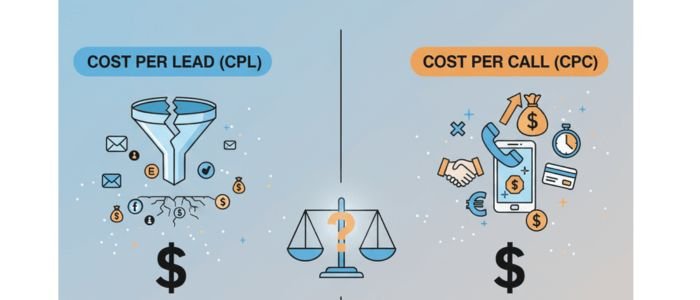
Marketing costs are evaluated by surface-level metrics, but the real expense lies in what happens after the first conversation. Paying for conversations and paying for data mean two different cost structures. Understanding this difference helps companies to assess ROI. Looking beyond upfront cost shows how engagement and lead quality affects efficiency.
Cost Per Lead: What You Are Paying For
Cost per lead is a common standard in digital marketing. It shows the amount spent to gather customer’s contact details. Lower cost might appear attractive at first glance. But the price only covers data capture and not the effort required to convert the data into revenue.
Hidden Costs Behind Lead-Based Campaigns
Leads carry indirect expenses that are overlooked. Such costs accumulate via the follow-up process. Common hidden costs are:
- Tracking software and automated email tools.
- CRM management, maintenance, and setup.
- Unresponsive contacts and missed calls.
- Sales team time spent on repeated outreach.
Handling large lead volumes requires additional staff which increases operational without confirmed outcomes.
Cost Per Call: Paying for Engagement
Cost per call transforms the focus from information to live conversation. Companies invest in real interactions instead of paying for emails and names. Inbound calls mean active engagement which reduces wasted spend linked to unresponsive clients.
Why Calls Provide More Cost Efficiency
Inbound calls condense increase sales step into a single interaction. Such efficiency impacts cost control directly. Companies can reduce the resources required to move clients forward by resolving questions in real time. Cost-saving benefits of calls are:
- Instant qualification.
- Shorter sales cycle.
- Fewer follow-up attempts.
Quality vs Quantity in Cost Evaluation
High lead volume can seem productive on sheets but might not convert into revenue. Cost per lead metrics reward quantity. Inbound calls arrive in smaller volumes but have stronger intent. Evaluating cost based on results instead of volume offers a clearer picture of value.
Paying for Connected & Qualified Calls
Most models focus on only paying when a call meets a pre-defined quality criteria. Such standards can include relevance, connection status, or duration. This approach helps companies to avoid paying for conversations that don’t result in revenue. Benefits of qualified call models are:
- Clear accountability for performance.
- Better alignment between sales and marketing.
- Reduced spend on irrelevant inquiries.
Performance-Based Call Models
Performance-based call models are created around results. Companies pay for genuine interactions. Companies measure value via real engagement instead of measuring success by how many contacts are collected. How performance-based calls differ:
- Lower dependency on long nurturing cycles.
- Emphasis on relevance and intent.
- Payment linked to connected conversations.
Predictability & Long-Term Cost Control
Investing in conversations can enhance cost predictability. Forecasting becomes precise when interactions align with marketing spend. Businesses can get:
- Reduced waste across operations and marketing.
- Improved sales efficiency.
- Better insight into CPA (cost per acquisition).
Choosing between paying for conversation or paying for data comes down to how companies define value. Understanding the full cost perspective enables marketers to invest in marketing channels that support sustainable growth and financial control.
🚀Did you know you can also buy leads online at an affordable price? Hoom Advertising allows home service businesses to grow their company with confidence, click here to know more.
6 Strategies to Convert Leads into Calls
Not all leads want to take action instantly, but most can be navigated toward a live conversation with the right strategy. Converting leads into inbound calls helps to close the gap between real engagement and initial interest. This strategy focuses on accessibility, messaging, and timing. Lead-to-call conversion increases meaningful interactions and reduces delays when executed correctly. The transformation from lead to call starts with reducing friction. Clients must clearly understand why calling is easy and beneficial. Clear CTAs (call-to-action) that emphasizes instant value motivate clients to call. Messaging must demonstrate direct support, clarity, and quick answers.
1. Using Automated Tools to Encourage Calls
Automation has a huge role in prompting leads to take the final step. Timely reminders can guide clients toward calling automated messages or emails can include reminders, scheduling links, or click-to-call options that support it.
2. Call Prompts & Scheduling
Scheduling tools helps to align interest and availability. Companies can offer structured call times instead of asking leads to wait. Such tools maintain momentum without overwhelming the clients. Common scheduling methods are:
- Confirmation messages with call prompts.
- Time-slot booking links.
- Instant callback options.
3. Scripts That Improve Call Response Rates
The first few moments of the conversation matter when a lead decides to call. Prepared scripts help sales staff to respond consistently and confidently. Scripts must focus on understanding needs instead of pushing instant sales.
4. Messaging That Encourages Engagement
The language used during or before a call impacts trust and comfort. A helpful tone encourages open conversation and reduces hesitation. Effective messaging focuses on emphasizing on help, professionalism, reassurance, and clear next steps.
5. Follow-Up Messaging That Promotes Calls
Since not every lead responds to the first prompt. Follow-up communication can reintroduce the option to call. Value-focused and short reminders that highlight support and availability keeps the door open for interactions and conversations.
6. Aligning Sales Staff for Call Readiness
Converting leads into calls works when sales staff are ready to answer. Support teams and sales staff must be aligned on expectations, messaging, and availability. When leads feel that calling will be a helpful interaction, they are ready to engage. Lead-to-call conversion strategies create a seamless transition from interest to action by fusing responsive teams, smart tools, and thoughtful messaging.
Conclusion
Understanding the difference between leads and inbound calls allows companies to align customer intent with efforts. By knowing what drives instant action and how clients engage, businesses can enhance responsiveness, refine messaging, and prioritize resources. Using this insight boosts conversion efficiency and fosters solid relationships with customers. Companies that adapt strategies to the preferred mode of engagement create a more agile and dynamic approach to marketing and sales. Understanding the value of every interaction ensures impactful outcomes across marketing campaigns and smarter decisions.
FAQs
When should a company focus on generating leads?
Leads are best for B2B environments, high-consideration purchases, and long sales cycles where multiple touchpoints and nurturing are required before a buying decision.
Do Inbound calls convert better than leads?
In some cases inbound calls show higher intent and urgency which allows companies to qualify customers and handle objections which further leads to faster conversions.
Can leads and inbound calls work together in marketing strategies?
Yes. Leads can be nurtured over time and high-intent clients are guided towards calls which creates a balanced approach that increases instant conversions.
How does customer experience differ between leads and inbound calls?
Leads require multiple follow-ups and waiting and inbound calls provide personalized service, clarification, and immediate response which enhances satisfaction and trust.
What metrics should companies track for leads and inbound calls?
For leads, companies must track qualification rate, follow-up engagement, and submission volume. For inbound calls companies must track conversion outcomes, connection quality, and call duration to measure real impact.


Leave a Reply