

Home service companies grow when customers reach out at the right time. A phone call shows strong intent for services like remodeling, roofing, HVAC, or plumbing. When a customer calls, they want to solve an urgent issue, request a quote, or are ready to book a service. That is why inbound call leads have become the most valuable lead generation method for home service providing companies. Calls convert at a higher rate, build trust instantly, and create direct conversations compared to emails or forms. Home service companies rely on inbound call leads to drive consistent growth. A phone call allows customers to make a quick decision, confirm availability, and explain their issue. Inbound call marketing revolves around consumer action unlike traditional advertising that focuses on clicks or impressions. Customers who are looking for a solution, find a service provider, and choose to call. This method connects customers with companies and filters out low-quality traffic.
Call-focused marketing campaigns are built to promote direct communication at the moment of need instead of simply running ads for visibility. Homeowners delays are boosting demand for home improvements and maintenance, with the U.S. existing home service industry projected to grow 5.7% CAGR from 2024-2026. Reaching homeowners requires social media platforms, paid ads, and search engines, all to play a role in how customers find local services. Some customers encounter service provided via targeted social media ads and some search on Google for instant solutions. A multi-channel marketing strategy ensures that companies can capture demand across various stages of decision-making process and platforms. Home service companies can create a more dependable flow of inbound leads, reach high-intent customers, and increase call volume by using various channels together.
Channel 1: SEO (Search Engine Optimization)

This is one of the best advertising channels for home service businesses. SEO plays a huge role in helping home service companies to attract inbound call leads from customers who are searching for solutions. When someone needs a remodeling contractor, electrician, or plumber, their first step is a search engine. SEO improves visibility in search results so that service-related websites show up when people are searching with clear intent. This means targeting service-specific and location-based searches that show instant need for home services.
SEO for home service companies depends on carefully selected keywords and niche-focused websites. Such websites are structured by keeping specific locations and services in mind, which makes it easy to match relevant pages with search queries. SEO connects companies with customers at the exact moment they are looking for help when done correctly, this naturally leads to higher-quality call leads.
How SEO Works for Home Service Companies?
SEO works by aligning the terms homeowners use when searching for services with website content. Such searches are time-sensitive and problem-driven. Keywords show solid intent since the customer is already looking for a service provider. SEO strategies that work for home service companies:
- Clear call paths that encourage phone calls.
- Location-based optimization.
- Service-specific keyword targeting.
Search engines prioritise user experience and relevance. Pages that describe contact options, locations, and services tend to perform better. When customers find a page taht answers their requirements, they call instantly.
Benefits of SEO for Inbound Call Generation
The biggest benefit of SEO is its ability to provide consistent organic traffic with the passage of time. Organic rankings do not fade away when a campaign stops unlike paid marketing. After the page ranks well, it keeps on attracting customers who are looking for services. SEO helps in filtering out low-intent users, and people looking for specific services want to take action. This results in:
- More chances of converting calls into booked jobs.
- Longer call durations.
- Higher call intent.
Another advantage is trust, as most customers trust organic search results compared to paid ads. Showing up in top searches can show credibility, which influences a customer’s decision to call.
Local SEO Targeting for High-Intent Searches
Local SEO is important for home service companies since most services are linked to specific geographic areas. Customers search using location-based phrases to find nearby service providing companies. Optimizing for local intent helps in ensuring visibility in such searches. Local SEO focuses on matching services with geographic relevance, this includes neighborhood-level keywords, service areas, and city names. It becomes more likely to appear for searches that include common phrases when a page is optimized for specific locations.
Key Elements of Local SEO
- Local keyword usage in content and page titles.
- Consistent company information across platforms.
- Location-specific service pages.
Companies can attract customers who have more chances of converting by targeting local searches since they are looking for instant and nearby help.
Optimizing Service Pages to Boost Call Conversions
Ranking in search results is only part of the SEO process, as service pages must be created to push homeowners to call. Easy access to phone numbers, simple layouts, and clear messaging all influence whether a visitor takes action. Service pages must focus on addressing the customer’s issue instantly. Content that highlights availability, outlines what to expect, and explains the service can help build confidence. Placing phone numbers clearly ensures that customers do not require to search for contact information. Well-optimized service pages make it easy for customers to contact a service provider and reduce friction.
Common Service Page Optimization Practices
- Simple layouts that guide customers toward calling.
- Clear click-to-call buttons for mobile users.
- Clear service descriptions without unnecessary distractions.
Tracking Organic Traffic to Measure Call Quality
Tracking organic traffic is vital for understanding how SEO works for inbound call leads. Measuring where calls come from helps to identify which locations, pages, and keywords generate the highest-quality call leads. Such data can be used to refine SEO strategies. Call tracking tools enable the companies to connect specific traffic sources with phone calls. It becomes easy to evaluate the effectiveness of SEO efforts by analyzing source pages, timing, and call duration. Tracking such metrics help to ensure that every SEO effort focuses on attracting callers who can convert into customers.
Metrics Commonly Used to Measure Call Quality
- Service relevance and time of call.
- Keyword or source page.
- Call engagement and duration.
📖Real-world examples show how such strategies drive growth: see “Customer Success Stories: How Local Plumbers Grew Their Businesses with HoomAdvertising“.
Channel 2: Paid Search Ads (Google & Bing)

Paid search advertising is the fastest way for home service companies to generate inbound call leads from customers who want to hire. Paid search ads place services directly in front of customers who are searching, this is different from organic strategies that take time to build. Such ads appear when customers enter service-related queries, which makes paid search a highly intent-driven channel for call lead generation.
Google and Bing are the main platforms that are used for paid search campaigns in the home services niche. Both platforms allow marketers to target specific devices, locations, and keywords, which ensures that each ad is shown to customers who want to call. Paid search campaigns can provide clear performance data with call volume when managed properly.
Google Ads for High-Intent Call Generation
Google Ads is commonly used to capture customers who are looking for instant solutions. Call-focused campaigns are effective since they encourage direct contact and remove unnecessary steps. Call extensions and call-only ads allow users to connect with a company from the search results. Such ads appear for searches with solid intent, like same-day needs or emergency services. Since the customer is already looking for a solution, the chances of a phone call becomes higher. Google Ads offer detailed targeting options that help to refine who sees the ad. Such formats are designed to provide service providers with customers instantly and reduce friction.
Common Google Ads Call Formats
- Mobile-focused click-to-call ads.
- Call extensions with search ads.
- Call-only search ads.
Underserved Search Audiences and Bing Ads
Bing Ads provide access to various segments of search users that is usually overlooked. Most Bing users may have higher household income and tend to be older, which can be valuable for specific home services. Since there is less competition to Bing, CPC (cost-per-click) rates can be lower than Google. Bing Ads use a similar structure to Google Ads, which makes it easy to apply existing targeting strategies and keywords. Bing can be a useful secondary channel for capturing additional call lead volume for home service companies without any increasing costs. Adding Bing Ads in paid search strategy can reduce reliance on a single platform and help diversify traffic sources.
Benefits of Using Bing Ads
- Opportunities for cost-efficient call generation.
- Access to a distinct user demographic.
- Lower competition in most service categories.
Benefits of Paid Search Advertising
The biggest benefit of paid search is speed, as campaigns can start generating calls right after launch, which makes this channel beneficial for companies that require instant results. Paid search also provides accurate control on targeting, which allows ads to appear only for specific time, locations, and services. Another benefit is measurability. Paid search platforms offer detailed performance data, which makes it easy to track conversions, calls, and costs. Such transparency allows companies to adjust campaigns based on actual results.
Keyword Targeting and Research for Maximum Call Volume
Keyword research is the basis of effective paid search campaigns. Keywords must reflect urgency and solid intent for home services. Generic terms lead to lower-quality traffic and service specific keywords tend to generate better call leads. Targeting must include geographic modifiers to ensure that ads reach local homeowners. Negative keywords are equally necessary because they prevent ads from showing for irrelevant searches. Selecting keywords carefully helps to improve call volume and maintain call quality.
Keyword Targeting Best Practices
- Use negative keywords to filter low-intent search.
- Prioritize same-day and emergency keywords.
- Focus on location + service combinations.
Writing Ad Copy Designed to Drive Calls
Ad copy plays a huge role in pushing homeowners to call. Direct and clear language works best for home service companies. Ads must communicate urgency, service type, and availability without overloading the customer with information. Including call-focused language helps set prompt action and expectations. Customers scanning search results make instant decisions, so ad copies must be easy to understand at a glance. Solid ad copies increase the chances that customers will choose to call.
Elements of Effective Call-Focused Ad Copy
- Simple call-to-actions phrases.
- Service area or location references.
- Clear service descriptions.
Big Optimization to Improve Control Costs and Call Quality
Big management helps to balance call cost and volume. Higher bids can increase visibility, but the issue is that they do not always lead to better-quality calls. Adjusting bids based on performance data helps to ensure that spending is navigated towards times and keywords that generate valuable calls. Device-based bidding and dayparting are commonly used to enhance efficiency. For instance, increasing bids on mobile devices or during business hours can help to capture calls when employees are available to answer. Optimizing bids gradually maintains call quality and helps reduce wasted spend.
Common Bid Optimization Techniques
- Increasing bids for high-converting search terms.
- Reducing spend on underperforming keywords.
- Adjusting bids by device and location.
Call Tracking for Real-Time Call Delivery
Call tracking connects phone calls with paid search, which provides visibility into campaign performance. It becomes possible to identify which keywords and ads generate calls by assigning unique tracking numbers. Real-time call delivery ensures that calls are routed instant when a customer reaches out. Tracking data then can be to evaluate call engagement, source, and duration. Such insights help refine focus efforts on generating meaningful inbound call leads and paid search campaigns. Key call tracking metrics are:
- Location and time of incoming calls.
- Call engagement and duration levels.
- Number of calls by keyword and campaign.
Channel 3: Social Media Paid Ads

Social media paid advertising has become a vital channel for home service companies looking to generate inbound call leads. Social media allows services to reach customers before they search for help unlike search-based platforms. Such platforms depend on the audience, which makes them useful for encouraging calls for customers who may require services soon and building awareness. TikTok, Instagram, and Facebook are commonly used social media platforms for home service marketing since their detailed targeting options and large user bases. Every platform provides formats and differences that support call-focused campaigns. Social media ads can contribute to a steady flow of inbound call leads and complement search traffic.
Social Media Platforms Used for Home Services
Facebook will stay as the most widely used platform for local service marketing because of its strong demographic and location targeting. Instagram works well for visual services, like landscaping and remodeling, where short videos and images can demonstrate real results. TikTok has gained a lot of traction for its short-form video content, driving engagement and capturing attention instantly. Such platforms enable advertisers to reach customers based on factors that are beyond the search intent. Ads can be shown based on past behavior and lifestyle signals instead of waiting for a customer to look up a service. This makes social media platforms used for supporting and expanding other advertising channels. Such formats make it easier for customers to initiate a call and help reduce friction.
Common Social Media Ad Formats
- Story placements and feed with call-to-action prompts.
- Call buttons with video ads.
- Click-to-call ads.
Targeting Customers by Behavior, Interests, and Location
Social media platforms use detailed data to target customers based on how they behave online and who they are. This allows ads to be visible to customers who want a service based on interests, homeownership status, and location. Location targeting ensures ads are only shown to customers residing within specific service areas. Behavior and interest targeting can refine the audience, which focuses on customers who have shown signs of recent service-related engagement or home improvement activity. Such an approach helps improve the chances of generating relevant calls and reduce wasted impressions.
Common Targeting Criteria for Home Services
- Behavioral indicators like recent engagements or searches.
- Interests related to home maintenance or improvement.
- City-based or geographic radius targeting.
Benefits of Social Media Paid Advertising
The main advantage of social media marketing is the ability to retarget customers who have previously shown interest. Most customers don’t call the first time they see an ad, and retargeting allows ads to be shown repeatedly to customers to interact with previous ads, watched a video, and visited a page. Social media also supports engaging ad formats that can visually explain services. Videos and images help communicate value, which can be useful for services that benefit from visual proof. Advanced audience segmentation improves efficiency by separating audiences based on engagement level and behavior.
Creating Call-Focused CTAs and Creatives
Creative design plays a big role in driving call leads from social media ads since customers are scrolling quickly, and ads need to communicate the call option and service clearly. Direct messaging and simple visuals tend to perform better compared to complex designs. CTAs (call-to-action) buttons must be consistent across ads and easy to find. Messaging must encourage instant action and focus on the service offered. These elements help ensure that customers understand how to take the next step and the purpose of the ad. Elements of effective call-focused creatives are:
- Mobile-friendly design optimized for click-to-call.
- Minimal text with a solid call prompt.
- Short explainer videos and clear service visuals.
Retargeting Campaigns to Convert Interested Customers
Retargeting campaigns focus on customers who visited a service page or have interacted with ads but did not call. Such customers may require an incentive to take action or additional reminder and are more familiar with the service. Ads can be customized based on past interactions by segmenting retargeting audiences. For instance, a customer who watched the complete video might get a different message compared to a person who briefly visited a page. Retargeting helps to increase the chances of converting interest into a call and maintain visibility.
Common Retargeting Segments
- Customers who clicked an ad but took no action.
- Video viewers with high engagement.
- Website visitors who did not call.
Using Analytics to Improve Call Quality
Analytics play an important role in refining social media marketing campaigns. Tracking performance data helps to identify which creatives, audiences, and ads generate the most calls. It becomes hard to separate low-intent interactions with high-quality leads without analytics. Social media platforms offer detailed metrics that can be fused with call tracking data. This enables advertisers to adjust budgets, creatives, and targeting based on real call results.
Key Metrics Used for Optimization
Using analytics to guide the customer’s decisions helps to ensure social media advertising remains an effective part of a multi-channel strategy and improves call quality over time.
- Timing patterns and call duration.
- Engagement rates by audience segment.
- Call volume and cost per call.
✍️For a deeper look at how social media platforms drive inbound call leads, read “The Role of Facebook Ads in Generating Calls for Home Services“.
How SEO, Paid Search, & Social Media Work Together to Generate Inbound Call Leads?
Multi-channel marketing is effective since customers don’t depend on a single platform when searching for home services. Some customers discover services via paid ads or social media, while others begin with search engines. Using different channels at the same time helps to ensure that visibility is consistent across the places where customers spend their time. This method increases the chances of capturing inbound call leads from customers at various stages of the decision-making process. Companies can create a steady flow of inbound call opportunities by combining social media advertising, paid search ads, and SEO. Every channel supports the others by covering in intent and reach. Combined, they form a more reliable and balanced lead generation strategy.
a. Combining Social Media Ads, Paid Search, and SEO

SEO attracts customers who prefer organic results and are searching for services. Paid search ads capture instant demand by appearing for high-intent searches that need fast action. Social media ads help re-engage those who have already shown interest and reach customers earlier in the process. They create various entry points of inbound call leads when these channels work together. A customer might first see an ad on Google, and then search on social media, and then call after finding a related service page. Such a layered exposure increases the chances of conversion. This blend helps reduce dependency on a single traffic source.
How Every Channel Complements the Other?
- Social media supports retargeting efforts and expands reach.
- Paid search provides targeted call volume and instant results.
- SEO builds consistent traffic and long-term visibility.
b. Exclusive Leads & Real-Time Call Delivery
Multi-channel marketing is effective when inbound call leads are delivered. Customers looking for services need instant assistance for time-sensitive or urgent problems. Routing calls quickly ensures that inquiries are handled when the intent is still high. Exclusive leads also have a bigger role in enhancing call results. The conversation is less competitive and more focused when a customer connects with only one company. This reduces lead fatigue and increases the chances of meaningful engagement. Instant call delivery helps to maintain momentum from the initial ad interaction search. Benefits of real-time call handling are:
- Reduce risk of missed opportunities.
- Higher engagement during calls.
- Faster response times.
c. Reaching Customers Who Are Ready to Act
A multi-channel method helps identify and reach customers who are prepared to make a decision. Retargeting campaigns, targeted ads, and high-intent searches all contribute to connecting customers who are closer to hire. This reduces time spent on unqualified leads. Companies can become more visible throughout the customer’s reach process by appearing across various platforms. The service provider company is already familiar when the decision moment arrives, this makes the call more likely.
d. Building Trust via Various Touchpoints
Trust is the main factor in home service decisions, and customers are more comfortable calling a company they have seen more than once. Various touchpoints across social media and search engines help brand credibility and recognition. Seeing a service in social feeds, paid ads, and organic search results create a sense of reliability. Repeated exposure can influence confidence and perception even without direct promotion. This familiarity supports higher call volume and reduces hesitation. Ways various touchpoints build trust:
- Familiarity before the call takes place.
- Repeated visibility during the research phase.
- Consistent messaging across platforms.
e. Driving Higher Call Volume Over Time
Depending on a single marketing channel can lead to inconsistent results. Changes in costs, competition, or algorithms can affect performance. A multi-channel strategy maintains call flow and spreads risk even when one channel underperforms. Data from every channel can be used to improve efficiency and refine targeting over time. This continuous optimization helps to improve over lead quality and sustain call volume without having to depend on one source alone.
📝 For more details on why inbound call leads outperform web leads, see “Why Local Inbound Calls Convert Better Than Web Leads“.
How to Choose the Right Advertising Channels for Home Services Businesses?
Various home service companies attract homeowners in multiple ways. Customers looking for a moving company might behave differently compared to someone who is planning a landscape work or dealing with a plumbing emergency. Advertising channels perform better when they are aligned with specific services being offered. Matching the right channel to the right niche reduces wasted spend and improves call quality. Understanding how customers make decisions, browse, and search with every service category enables companies to focus on channels that provide stronger inbound call leads. Some services benefit from planned research or visual content, while others depend on urgency.
1. Marketing Channels for Moving Services
Moving services involve research, comparison, and planning. Customers looking for movers compare reviews, availability, and prices before calling. Google search plays a solid role since customers are looking for long-distance and local moving options. Social media ads can support this process by keeping services visible in the research phase. Google Ads help to capture high-intent searches that are related to locations and moving dates. Social campaigns assist by reaching customers who have shown signs of relocation interest, like recent address changes or home searches. This blend helps to reach customers at various points in their decision phase. Common channel focus for moving leads are:
- Social media campaigns to support retargeting and consideration.
- Google search ads for location-based queries.
💳Companies planning to get exclusive leads to grow their business can buy moving leads online today.
2. Best Channels for Plumbing and HVAC Services
Plumbing and HVAC services are usually problem-driven and urgent. Customers often search for instant help when dealing with temperature issues, leaks, and breakdowns. Here, SEO plays a vital role since organic search results are trusted during emergencies. Bing Ads are also effective for plumbing and HVAC because of a user base that includes homeowners and lower competition. Such platforms allow emergency-related and service-specific searches. This method helps reach customers who are ready to call and require instant solutions. Effective channel mix for plumbing and HVAC:
- Bing Ads to capture underserved search traffic.
- SEO targeting service-based and emergency-related keywords.
🛍️For home service businesses wanting to thrive, they can buy HVAC leads onlineand buy plumbing leads onlinevia HoomAdvertising.
3. Advertising Channels for Cleaning and Landscaping Services
Cleaning and landscaping services are more visual in nature and less urgent. Customers might look for inspiration, compare services, or browse options before making a decision. Social media platforms work well for such services since they support ongoing engagement, videos, and images. Facebook and Instagram enable marketers to promote recurring services and showcase before-and-after results. Such platforms support audience segmentation and local targeting, helping to reach customers interested in improvement or maintenance services. Social media marketing campaigns encourage calls when customers are ready and build awareness. Social media strengths for clean and landscaping:
- Audience targeting based on interests and homeownership.
- Visual content to demonstrate service quality.
🛒For companies wanting to expand the landscape and lawn care business, they can buy lawn care leads online here.
4. Choosing the Right Channel for Every Niche
Selecting the right marketing channel relies on how customers search for a specific service. Visual or planned services benefit from social media exposure, while urgent services perform better on search-based platforms. Fusing channels improves reach. Factors that influence channel performance:
- Typical homeowner research behavior.
- Visual appeal of the work.
- Level of urgency linked with the service.
Understanding such factors help align customer expectations with advertising efforts and improves inbound call outcomes across various home service industries.
Cost Breakdown of Advertising Channels for Home Service Businesses
ROI (Return on Investment) and cost control are the main concerns for home service businesses investing in marketing. Each dollar spent must contribute to generate real leads. Channels like social media advertising, paid search ads, and SEO provide various cost structures, and each can be optimized to improve lead quality when managed correctly and reduce wasted spend. Evaluating cost-effectiveness includes looking beyond all surface-level metrics. Companies need to understand which channel generates meaningful calls and how those calls become booked services. This method helps to determine where budgets provide the strongest returns.
Reducing Wasted Spend Across Marketing Channels
SEO reduces wasted spend by targeting customers who are looking for a specific service. Organic traffic is more intent-driven, which lowers the chances of paying for unqualified leads. After the service pages rank, they can continue generating calls without any additional cost per click. Paid search ads help control spend via accurate location and keyword targeting. Marketers can decide when ads show up and which searches trigger them, this reduces exposure to irrelevant customers. Social media ads contribute by narrowing audiences based on behaviors, interests, and location. Combined, such controls help prevent budgets from being spent on low-intent traffic. Ways these channels limit waste:
- Social ads reach defined audience segments.
- Paid search filters traffic using negatives and keywords.
- SEO focuses on service-based and high-intent searches.
Measuring ROI from Call-Focused Campaigns
ROI can be measured by tracking calls. Phone calls provide solid indication of intent and allow for evaluation of lead quality directly. Metrics like booking results, service relevance, and call duration help assess performance more precisely. Every channel contributes differently to ROI. SEO provides lower ongoing costs, and paid search offers instant and measurable returns. Social media ads support the funnel by retargeting customers who may call later and generating interest.
Self-Managed Ads Campaigns vs. Exclusive Leads
Comparing exclusive leads with self-managed marketing campaigns involves effort and cost. Exclusive leads come at a fixed cost per call, which makes budgeting easier and more predictable. Companies get inquiries without managing any creative asset, keyword, and ads. Running an in-house campaign provides complete control but requires ongoing optimization, expertise, and time. Costs can vary based on performance fluctuations, platform changes, and competition. Both methods have trade-offs depending on goals and resources. Key cost comparison factors are:
- Level of control over messaging and targeting.
- Variability in cost per lead.
- Upfront management expertise and time.
Understanding Long-Term Cost Efficiency
Long-term efficiency depends on how well marketing campaigns are optimized. SEO becomes more cost-effective as rankings enhance. Social media marketing campaigns and paid search ads improve ROI via data-driven adjustments and testing. Regular monitoring performance helps to ensure advertising spend continues to generate valuable inbound call leads. Factors that improve ROI are:
- Adjusting budgets toward high-performing channels.
- Eliminating underperforming audiences and keywords.
- Refining targeting based on call data.
How to Budget an Advertising Campaign for Home Service Businesses?
Budgeting and scaling are crucial for maintaining a steady inbound call volume in home service marketing. Campaigns can miss high-intent opportunities or overspend on low-performing channels without a clear budget structure. Effective scaling improves performance before increasing marketing budget. Understanding how every channel contributes to calls helps to ensure that growth does not come at the cost of ROI.
Step 1: Allocating Budget Across Marketing Channels
Budget allocation must reflect how customers engage with various services and how customers search. SEO requires upfront investment and can provide long-term results. Google Ads receive a large share of short-term budgets because of instant call potential and higher search volume. Bing Ads can complement this by capturing organic traffic at low cost. Social media budgets support consistent visibility, retargeting, and awareness. Every channel serves a unique role within the overall strategy. Allocating funds across them stabilises call flow and helps reduce risk. Balance such elements help avoid overreliance on a single channel.
The table below provides an estimated potential returns and percentage allocations, and real outcomes might vary based on campaign performance, location, and industry.
| Advertising Channels | Budget Purpose | Typical Budget Share | Key Focus Area |
| SEO (Search Engine Optimization) | Build long-term organic visibility and steady inbound call leads | 25%–35% | Service page optimization, local keywords, organic call tracking |
| Google Ads | Capture high-intent homeowners searching for immediate services | 30%–40% | Call-only ads, keyword targeting, bid optimization |
| Bing Ads | Reach additional search users with lower competition | 10%–15% | Cost-efficient keywords, location targeting, call-focused ads |
| Social Media Paid Ads | Build awareness and retarget interested homeowners | 15%–25% | Audience segmentation, call CTAs, retargeting campaigns |
Step 2: Scaling Campaigns Without Losing ROI
Scaling too fast can lead to lower-quality calls and wasted spend. Campaigns must be reviewed for performance trends before increasing budgets. Channels that produce better conversion results consistently and longer calls are better candidates for scaling. Slow increases enable performance to be adjusted and monitored. Scaling must be data-driven. This method helps to increase volume and maintain efficiency.
Common Scaling Practices
- Testing new ad formats or creatives before full rollout.
- Expanding service areas incrementally.
- Increasing budgets on proven audiences or keywords.
Step 3: Seasonal Adjustments in Home Service Marketing
Seasonality has a huge role in home service demand. HVAC services see spikes in extreme weather and landscaping demand might rise in warmer months. Budgeting must account for such fluctuations to avoid unnecessary spend or missed opportunities. Adjusting budgets ahead of peak seasons help to capture higher call volume. Budgets can be shifted or reduced toward maintenance campaigns during slower periods. Seasonal planning helps to maintain steady performance the whole year.
Step 4: Forecasting Call Volume for Better Planning
Forecasting call volume allows companies to plan campaign adjustments, budgets, and staffing. Past data from previous campaigns provide insight into expected demand and patterns. This information helps avoid under or over investment. Using forecasting as part of budgeting supports consistent inbound call performance and controlled scaling.
Conclusion
Effectively generating inbound call leads for home service companies require a strategic blend of careful planning and channels. Companies can allocated resources efficiently across social media, paid search, SEO by understanding how customers make decisions, engage, and search. Scaling campaigns, adjusting budgets, and monitoring performance ensures consistent lead flow. Multi-channel exposure increases visibility and builds trust with customers along with familiarity. A fully coordinated method help companies to reach the right audience when they are looking to hire, driving more actionable call leads.
FAQs
What are the 3 best advertising channels?
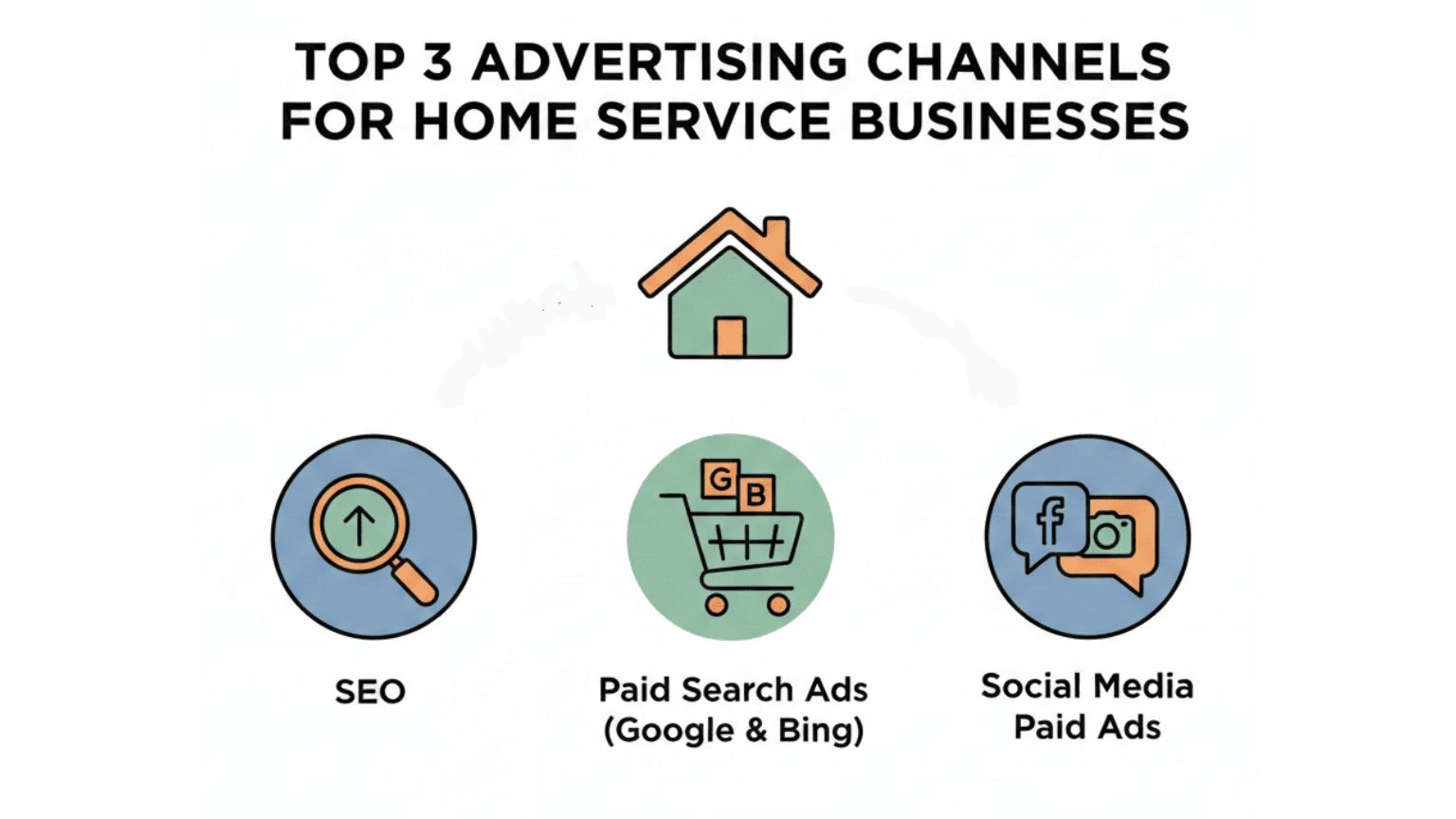
The 3 best advertising channels for home service businesses are social media ads, paid search (Google and Bing), and SEO, which together generate high-quality inbound call leads and maximize visibility.
Which platforms are best for advertisement?
The best platforms for advertising depend on the service. Google Ads is best for urgent searches, Bing Ads reaches underserved audiences, Facebook, Instagram, and TikTok work for retargeting and visual services.
What are the best advertising platforms for small businesses?
Google Ads is most effective for high-intent searches and Facebook and Instagram help retarget local customers and build awareness for small home service companies.
What is the most effective and powerful marketing channel?
The most effective and powerful marketing channel for home service businesses is a multi-channel approach, which combines social media, paid search, and SEO to generate high-intent inbound call leads.


Leave a Reply